
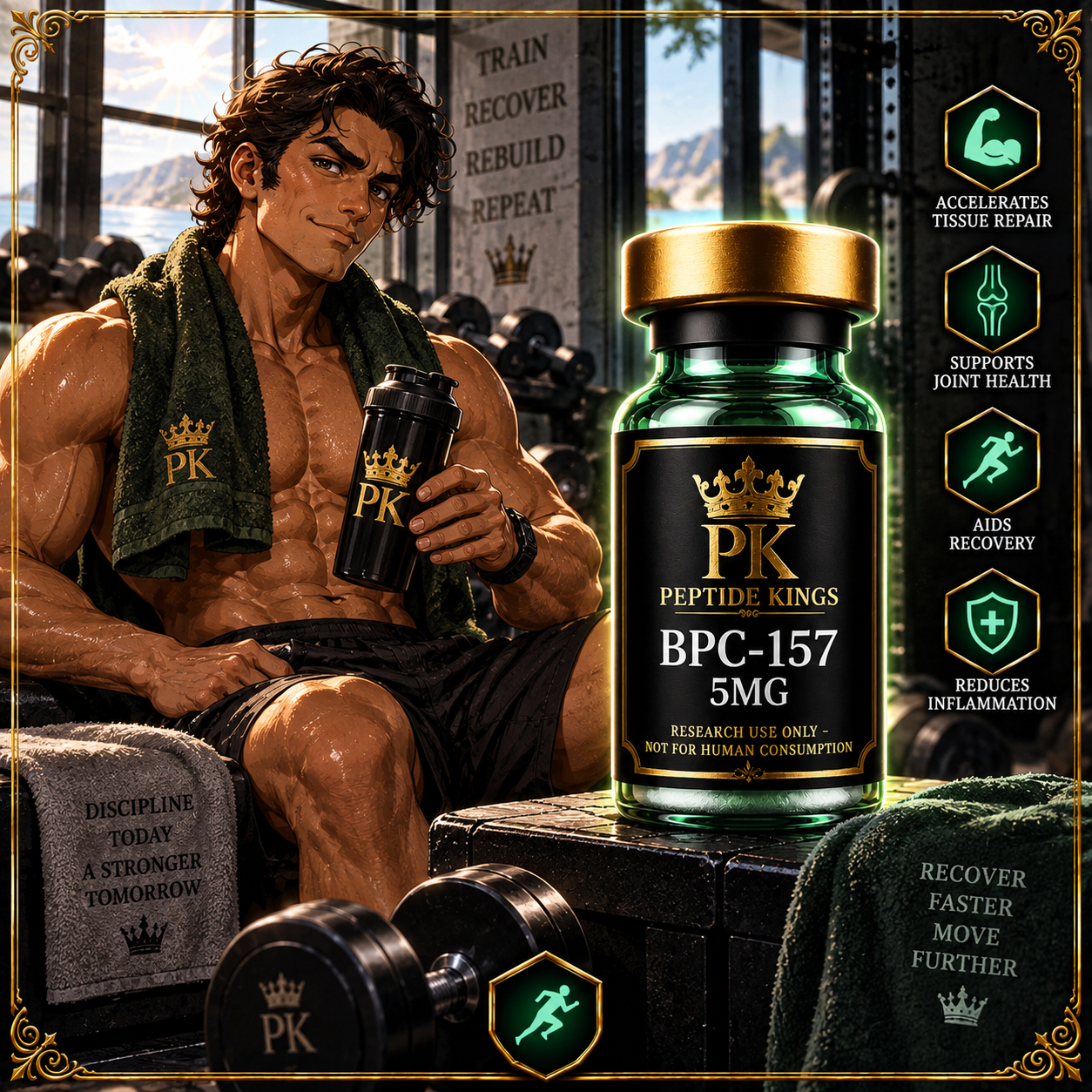
BPC-157 10MG
· Lyophilised powder
Stability-tested BPC-157 supplied as a sterile 10 mg lyophilised vial for in-vitro study.
BPC-157 (Body Protection Compound-157) is a synthetic research peptide intended exclusively for laboratory and scientific research use. BPC-157 is a 15-amino-acid peptide derived from a sequence associated with a protein found in gastric juice. It has been investigated primarily in preclinical and laboratory research examining tissue response, cellular migration, angiogenesis, gastrointestinal biology, and inflammatory signalling. BPC-157 remains an experimental research compound, and its mechanisms and biological significance continue to be investigated.
Product Features
- Compound: BPC-157 (Body Protection Compound-157)
- Form: Lyophilized (freeze-dried) powder
- 15-amino-acid research peptide
- High-purity research-grade material
- Manufactured under strict quality control standards
- Sterile, securely sealed vial
Research Applications
BPC-157 is commonly investigated in laboratory and preclinical studies involving:
- Cellular repair and tissue-remodelling pathways
- Angiogenesis and vascular signalling
- Gastrointestinal and gastric tissue biology
- Connective tissue research
- Cellular migration and signalling mechanisms
- Inflammatory response pathways
- Compound
- BPC-157 10MG
- Strength
- Form supplied
- Lyophilised powder
- Research areas
- Research Peptides
- Storage
- Store lyophilised material refrigerated between 2–8°C (Celsius), cold and dark, protected from light and moisture.
- Batch reference
- Stated on the vial label at dispatch
- Analytical documentation
- No analytical document is currently held for this batch. Where documentation is held it is published here.
Specification
Research-use notice
All products supplied by The Peptide Kings are sold strictly for laboratory research use only. They are not medicines, not dietary supplements, and are not intended for human or veterinary consumption or administration. Information published on this website is provided for educational and scientific reference purposes only and must not be interpreted as medical advice.